The Analog Hardware Profiler
A few years ago, I set a new challenge for myself. I’d like to build audio plugins that are great quality and fun to use. I love to sound design and make music with plugins, and I want to contribute to the creativity of these tools.
I am also very fascinated with analog recording equipment, and love using the filter shaping/saturation from the circuits of many different eras. At our recording studio, Ohmstead, we have RCA preamps from the 60s that sound so bassy and round, it makes kick drum mics sound incredible! But I want to have that analog sound without being tied to the physical unit!
I have always wondered how UAD, Shure, Arturia, Waves, and Shure make audio plugins that accurately model the unique non-linear traits of analog preampifiers.
So, I thought I’d make one! I decided that I would design a system identifying program that uses test tone recordings, sent through an analog preamp/drive circuit, to design a filter “profile”. I could then save the unique tonal saturation of multiple preamps with this one profile-saving program. This is a lot like Kemper’s amp profiling conceptually; however, if we want the shape and intensity of harmonics generated by the saturation to be accurate to the original device we need to take measurements at multiple gain stages and likely more gain stages than the Kemper process.
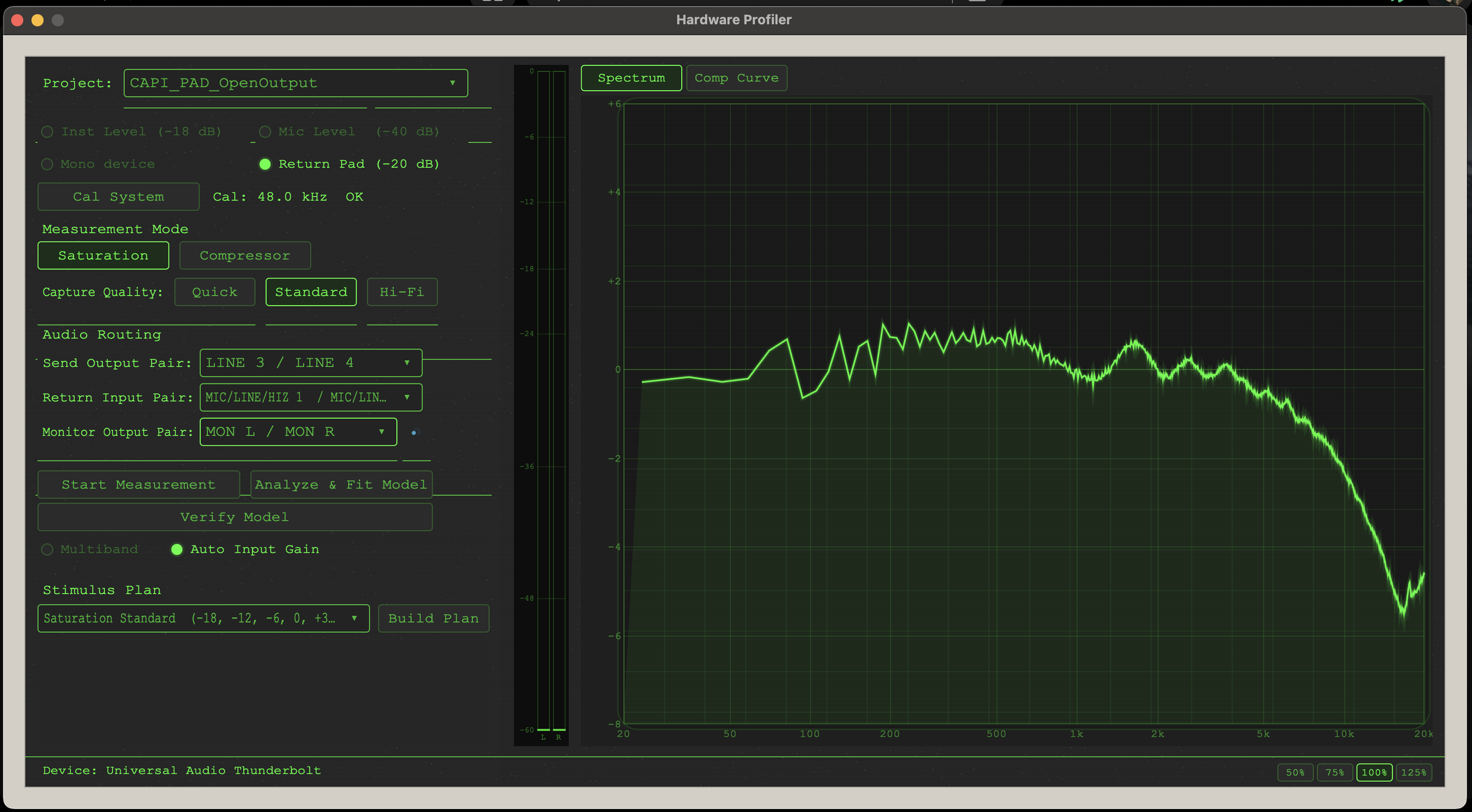
Basically, my profiler offers three different modes of measuring your gear. Quick, Standard, and Hifi. The higher the quality, the more measurements have to be taken. The user must have an audio interface with 4 outputs to accommodate the send/return loop needed to recording these measurements as we are sending these out of our D/A, into the preamp, back into the A/D converter. My program allows you to easily change those intputs/outputs to match your studio, it also allows for the adding of pads to measure inst. level or line level equipment. Or to simply send a low gain signal because that specific gear has a very hot input gain.
Why analog hardware modeling? What’s the point of this project?
This profiler could be dialed in and adjusted to accurately recreate many different outboard units. So, it could be used to sell many different modeling plugins, one very extensive library of models, or even a kemper-like plugin system where users can save their own analog signal chains as presets.
Explaining the measurement process:
The user has to manually set their input/output gain knobs on the preamp to match what our measurement system says, then the system will send 2-4 measurement tones through it at those settings to compare the audio that comes out of the preamp/drive unit to the original reference recording. Those measurements have to be captured multiple times, with the user changing the gain settings multuple times throughout the process. I’ve setup the profiler with multiple different stimulus plan versions because the potential gain values on the unit that you’re measuring may not always be the same. One example of the gain stages that one could record with this model is: (-18dB, -12dB, -6dB, 0dB +3dB, +6dB). 2-4 measurement recordings are done at each gain stage so the higher the capture quality the more measurements you have to do.
I’ve found that it’s very important to make sure your gain levels during the measurement process are accurate and you also want to make sure that the A/D converters aren’t getting clipped at the maximum gain stages because that will make the measurements inaccurate.
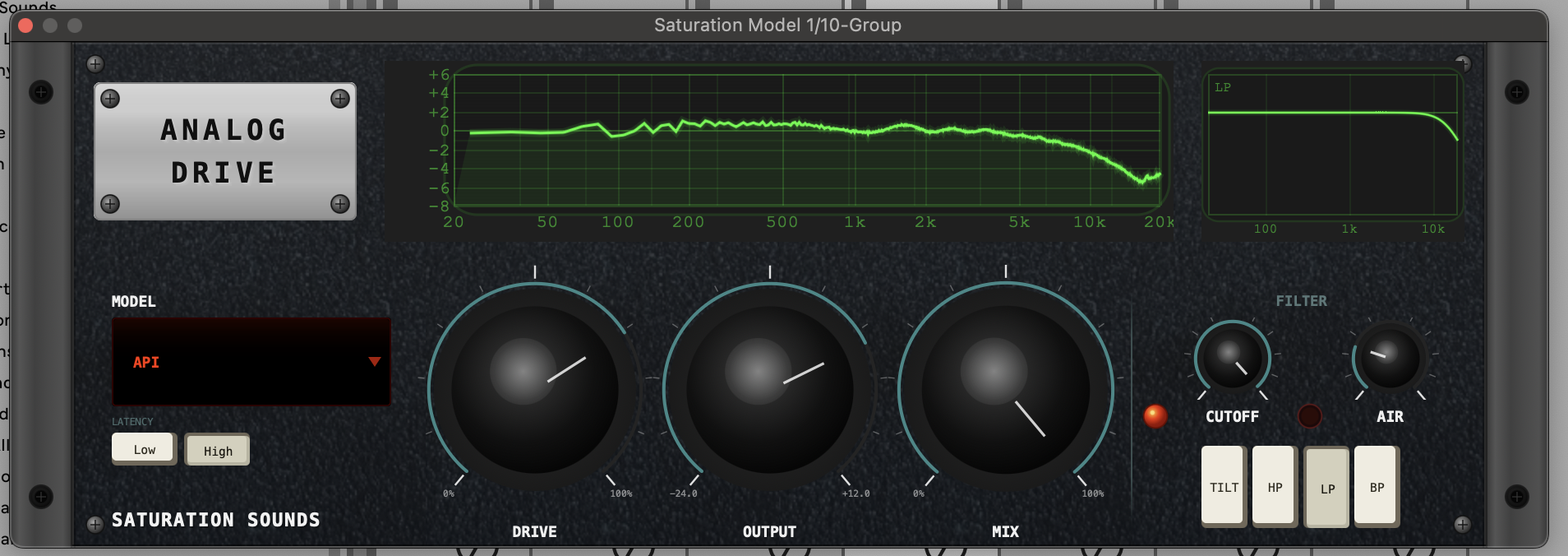
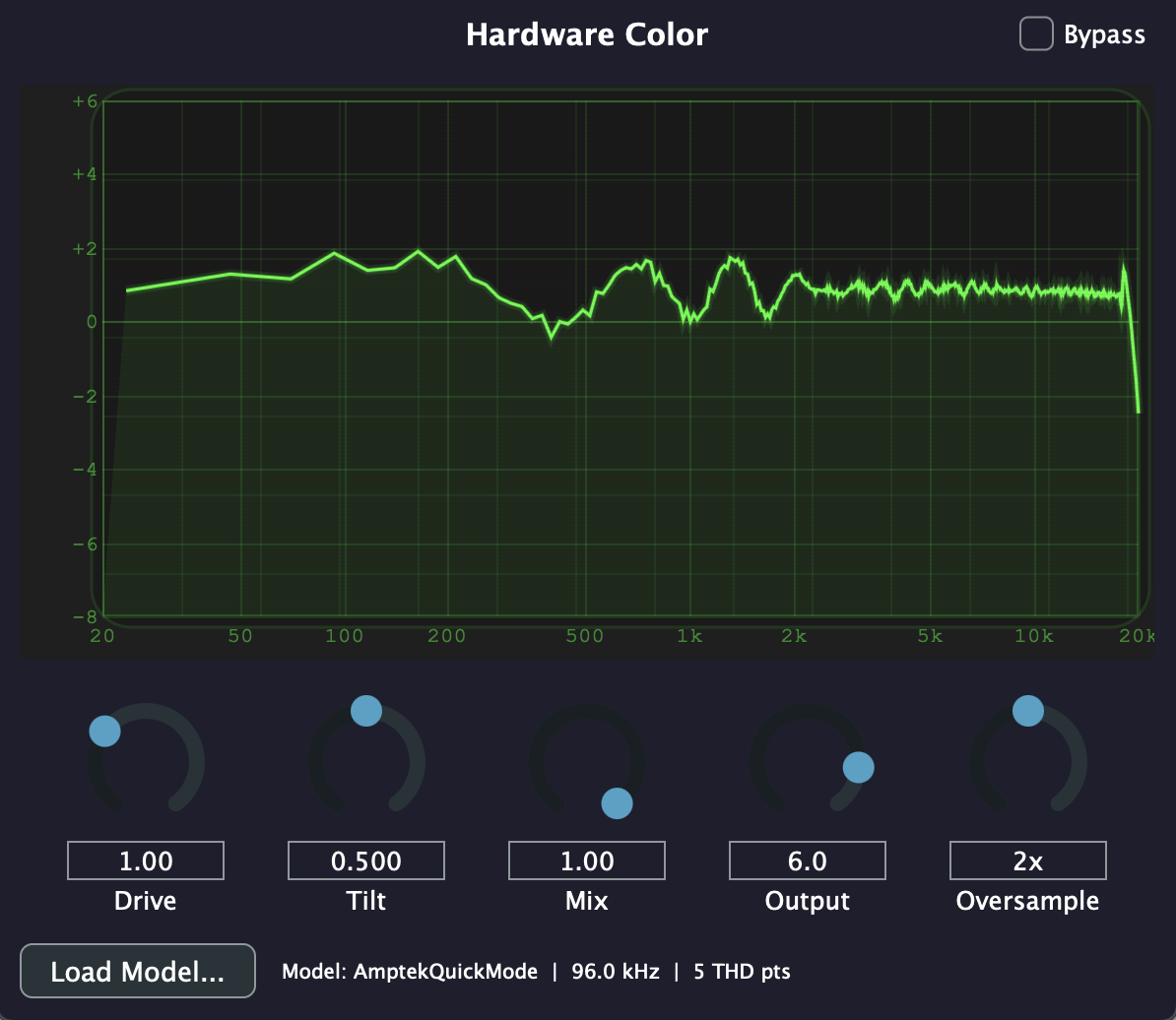
There’s a lot more math to discuss with this! Especially within the filters used. But here’s what the modeler is looking like right now with the measurement of a CAPI CP28 preamplifier. Also here are two VST3 plugins that use these profiles to create a modeling saturation/distortion effect within your DAW.